Working at heights is one of the most high-risk activities across industries like construction, maintenance and utilities. Whether you’re climbing…
Blog
The Basics of First Aid: What Everyone Should Know
Whether you’re at home, work, school, or out in the community, emergencies can happen when you least expect them! First Aid is the immediate care given to someone who is injured or suddenly ill until professional medical help arrives.
The good news is that you don’t have to be a medical expert to make a difference. In fact, knowing just a few key First Aid basics can save a life.
Here’s some basics that everyone should know.
1. DRSABCD – The First Aid Action Plan
In any emergency, remember the DRSABCD approach. It helps you respond quickly, calmly and safely:
-
D – Danger: Check for danger to yourself, the casualty and others
-
R – Response: Check if the person is conscious by calling out to them and touching their shoulders
-
S – Send for help: Call Triple Zero (000)
-
A – Airway: Ensure the airway is clear
-
B – Breathing: Look, listen and feel for normal breathing
-
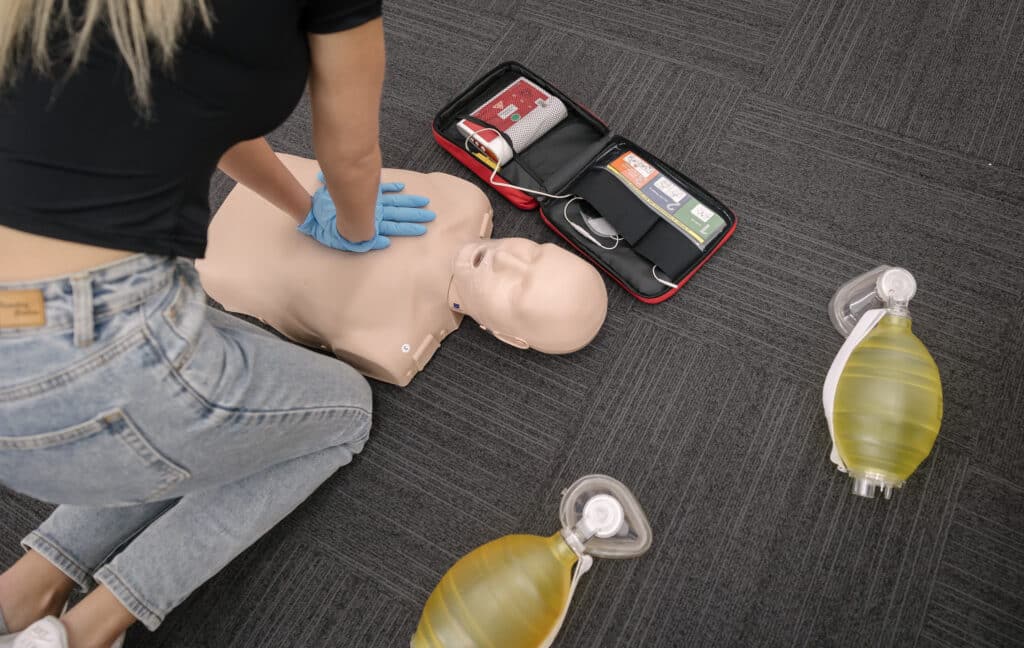
C – CPR: Start CPR if the person is unresponsive and not breathing
-
D – Defibrillation: Use an AED (if available) as soon as possible
We teach this life-saving process in detail in our HLTAID011 Provide First Aid course with lots of hands-on practice so you feel confident to use these skills when needed.
2. Managing Bleeding
-
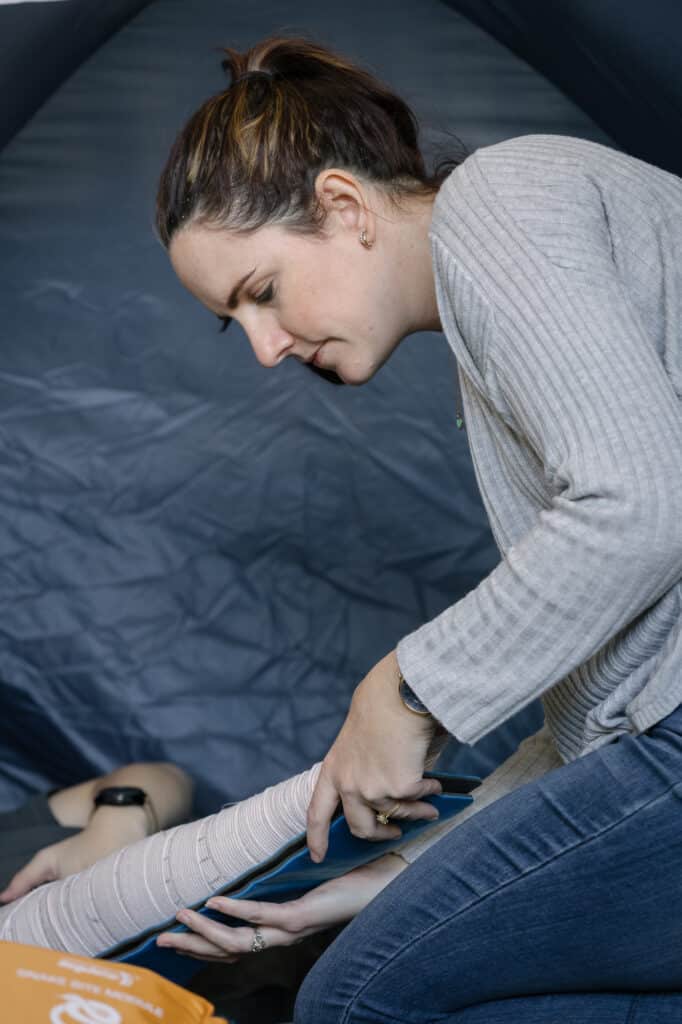
Apply firm, direct pressure to the wound using a clean cloth or bandage
-
Elevate the injured area if possible
-
Call for help if bleeding is severe or doesn’t stop
-
Do not remove objects embedded in the wound, instead apply pressure around it
3. Treating Burns
-
Run cool running water over the burn for 20 minutes
-
Remove jewellery or clothing near the burn (unless stuck)
-
Do not use ice, creams or butter
-
Cover the burn loosely with clean cling wrap or a sterile dressing
-
Seek medical help for serious burns, or if on the face, hands, groin, or larger than a 50-cent piece
4. Helping Someone Who’s Choking
-
Encourage them to cough if they can still breathe or talk
-
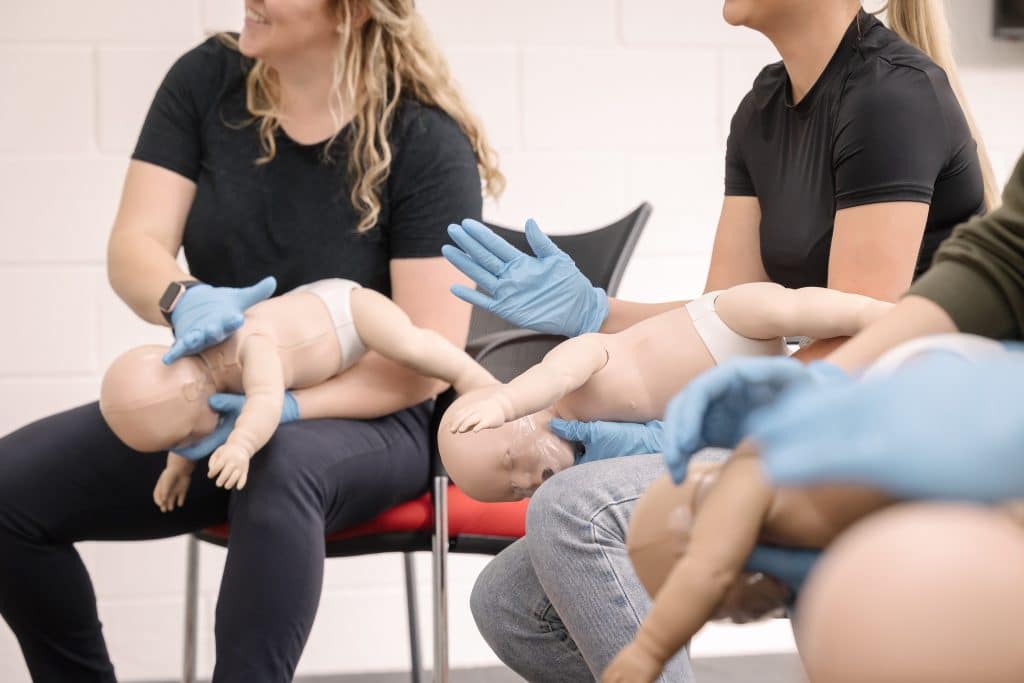
If the airway is completely blocked, use back blows and chest thrusts
-
Call 000 if the person is in distress or becomes unresponsive
-
Be prepared to start CPR if needed
For a more in-depth guide, check out our recent blog on What to Do if Someone is Choking.
5. Using an AED (Defibrillator)
An AED is used during cardiac arrest and can help restore a normal heart rhythm.
-
AEDs are designed to be simple: they give you voice prompts and walk you through each step
-
Turn it on, attach the pads to the chest, and follow the prompts
-
Resume CPR between shocks as instructed
Many workplaces now have AEDs, and it’s critical that staff know how to use them. We show you exactly how in our First Aid training.
6. When to Call Triple Zero (000)
You should always call 000 for:
-
Unconsciousness or unresponsiveness
-
Breathing difficulty
-
Severe bleeding or burns
-
Chest pain
-
Seizures
-
Suspected stroke or heart attack
-
Any situation where someone’s life may be at risk
Encourage children and co-workers to know how and when to make an emergency call, including what to say and how to give your address.
Why First Aid Training Matters
We offer nationally accredited, hands-on First Aid courses that give you the knowledge and confidence to act when it matters most. Book into our HLTAID011 Provide First Aid course today and learn the skills that could save a life.